Entity Relationship Model
Data: Any fact that can be recorded.
Database: Collection of related data.
$$ DB + DBMS \rightarrow DBS $$DBMS: Set of programs used to define, construct and manipulate database.
Database design proceeds as:
$$ \text{High Level or Conceptual Model} $$$$ \downarrow $$$$ \text{Representational or Implementation Model} $$$$ \downarrow $$$$ \text{Low Level or Physical Data Models} $$ER Model: It is used to represent the diagrammatic design (HL design of DB).
Main Components in ER Diagram
1. Entity: An entity is a thing that has an independent existence.
2. Relationship: It is an association among several entities.
3. Attributes: Attributes are characteristics or properties that describe entities or relationships.
Entity Types
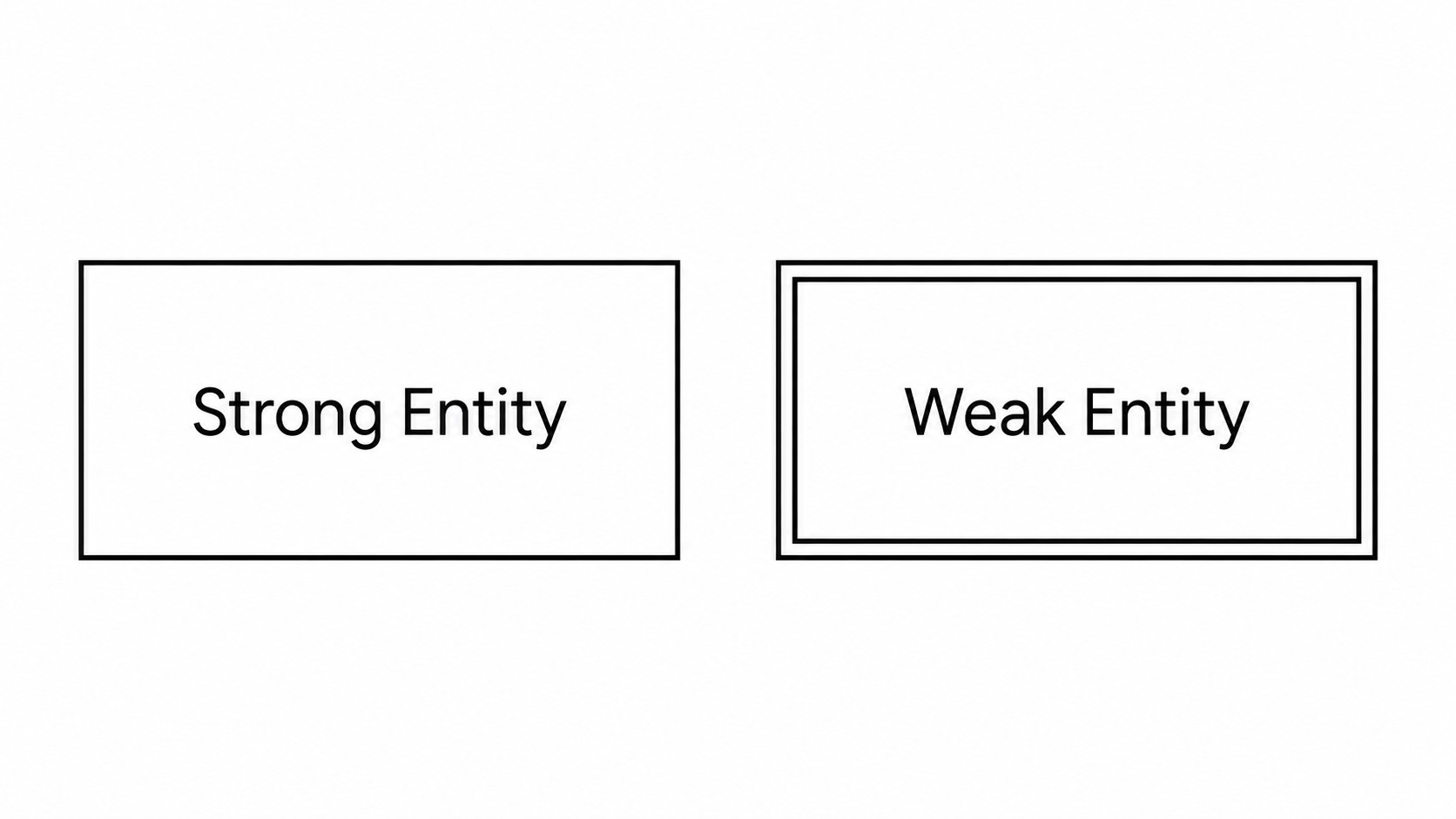
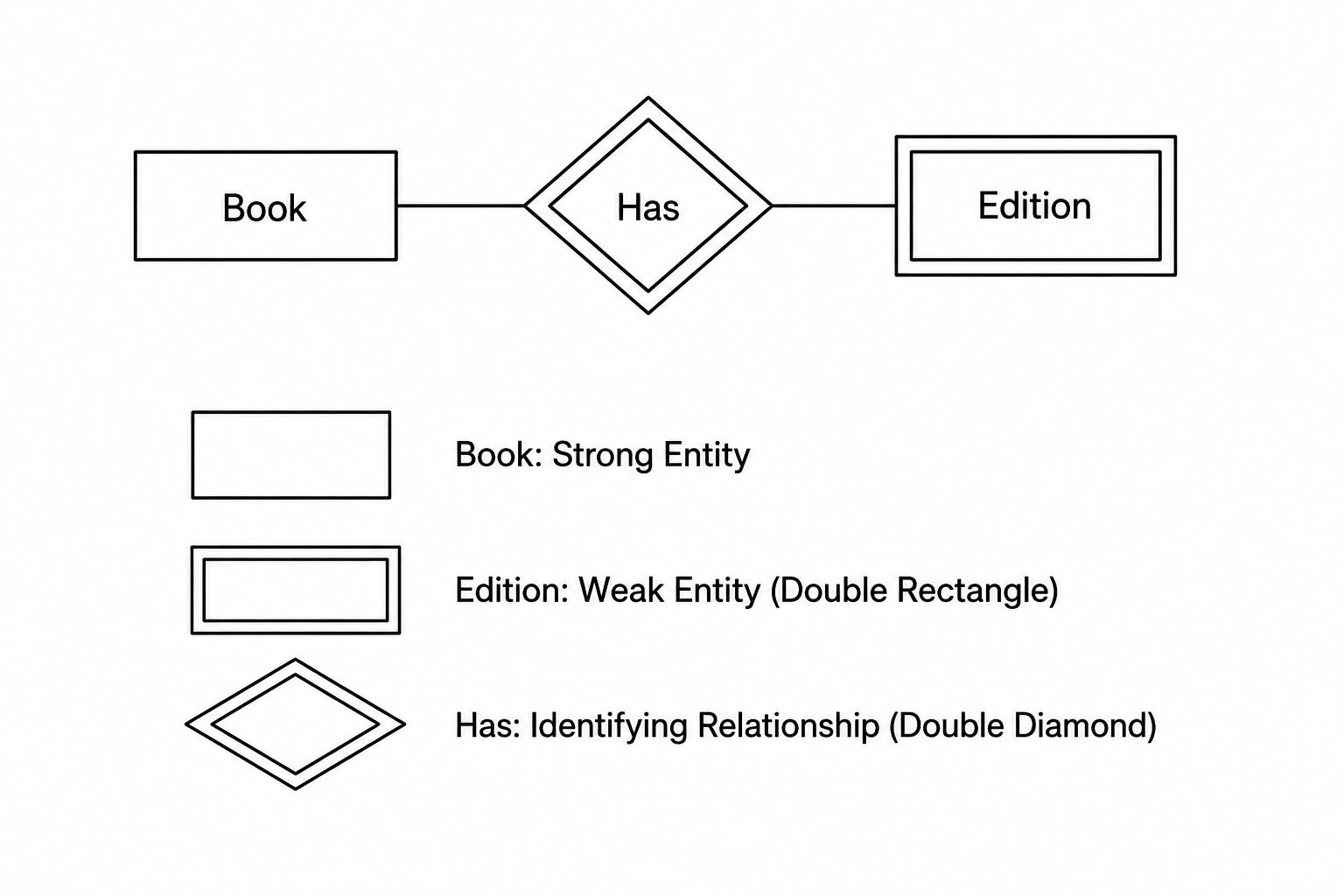
1. Strong Entity: An entity that can exist independently of other entities.
- Has a unique attribute known as primary key.
- The primary key identifies each instance of the entity.
- Examples:
- Student
- Employee
- Product
2. Weak Entity: An entity that cannot exist independently and relies on a strong entity to define its identity.
- Associated with a strong entity, often through a partial key.
- Example:
- Dependent exists in relation to an Employee entity.
Attribute Types
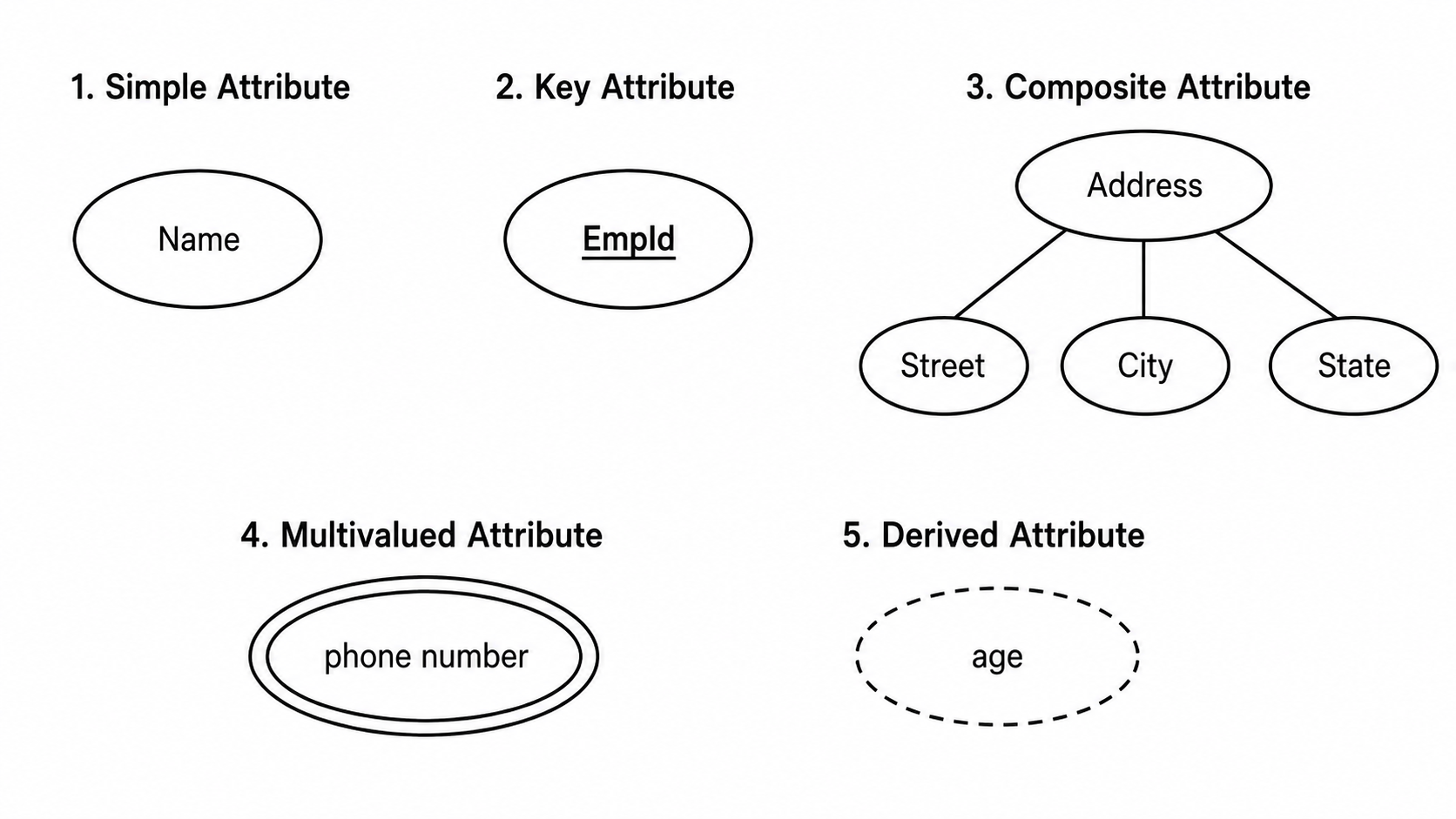
| Type | Definition | Example |
|---|---|---|
| Simple Attribute | A single, indivisible attribute | Age |
| Key Attribute | Uniquely identifies an entity in the entity set | StudentID |
| Multivalued Attribute | Can have multiple values for a single entity | Phone Numbers |
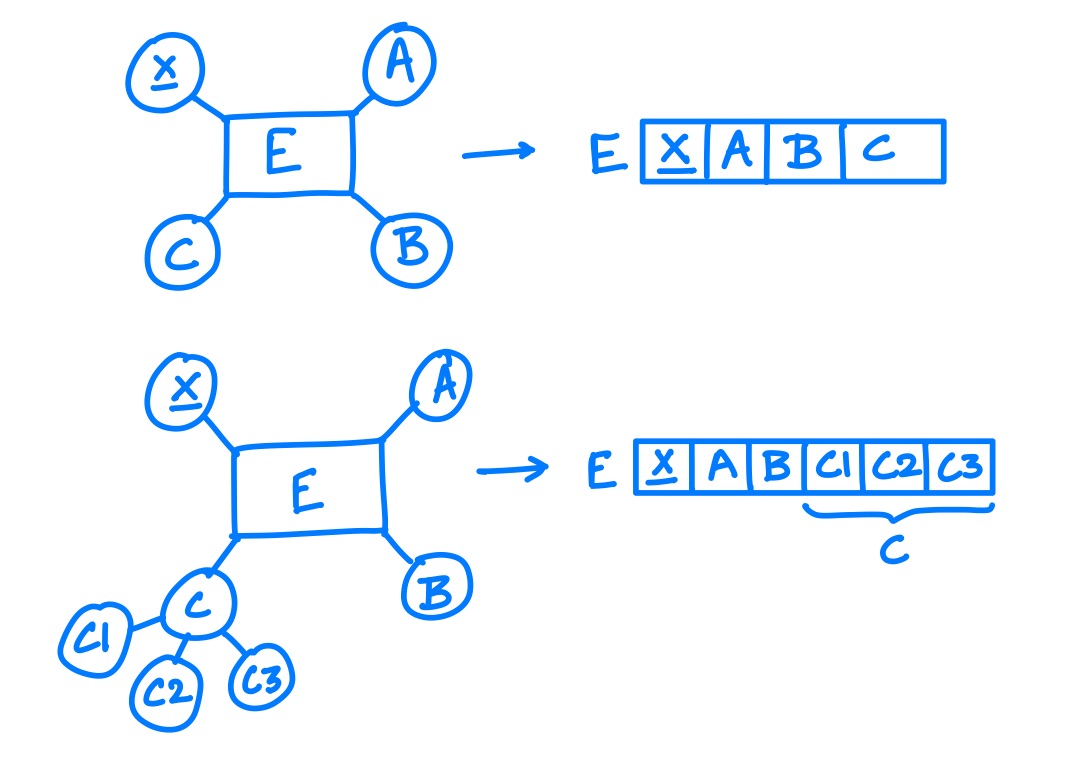
| Composite Attribute | Made up of multiple components, each representing a part of the attribute | Address $\rightarrow$ Street, City, State |
| Derived Attribute | Calculated or derived from other attributes | Age derived from DOB |
Degree of a Relationship Set
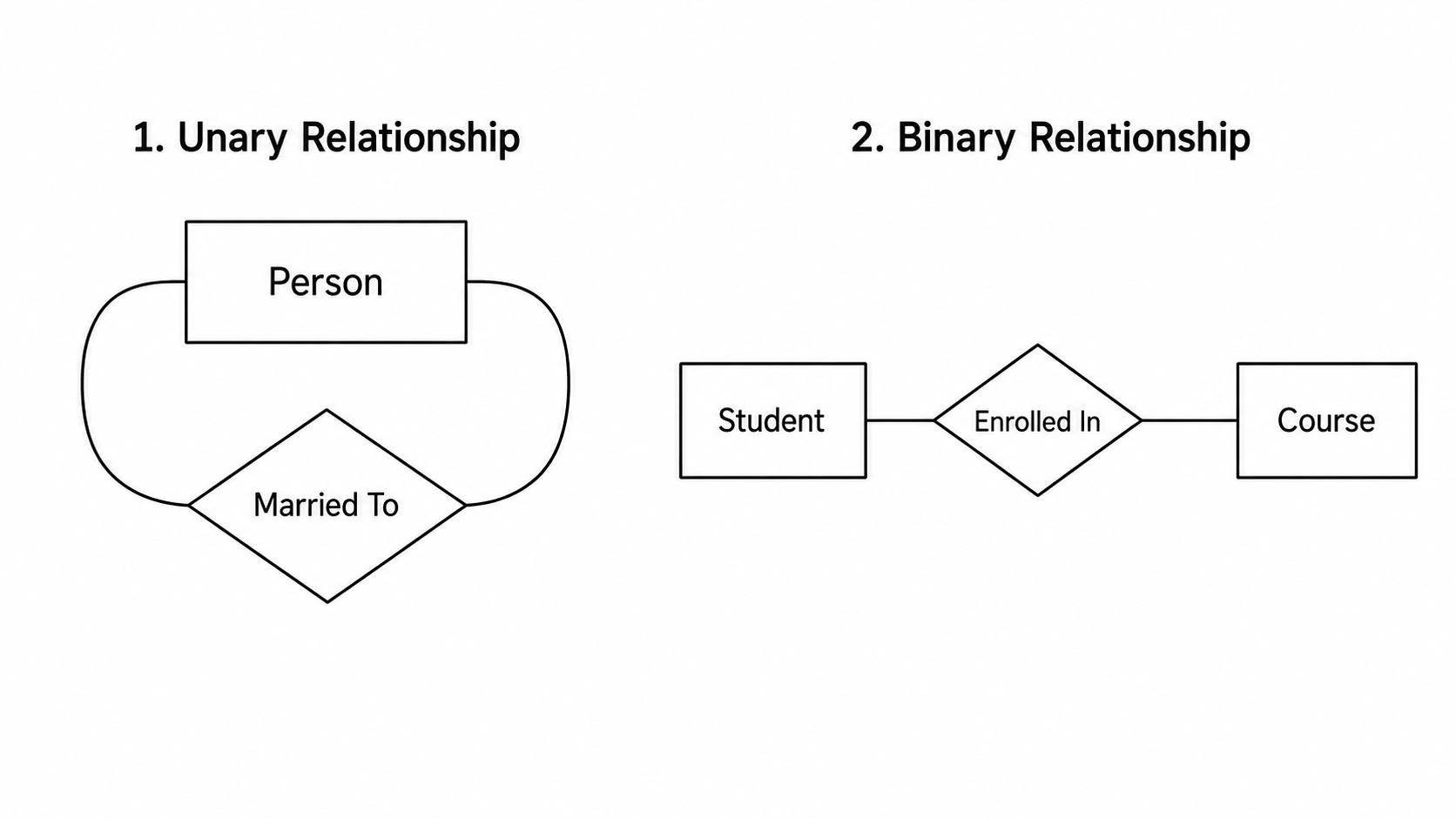
The degree of a relationship depends on the number of entity sets participating in the relationship.
| Relationship | Number of Entity Sets | Description |
|---|---|---|
| Unary | 1 | Only one entity set participates |
| Binary | 2 | Two entity sets participate |
| Ternary | 3 | Three entity sets participate |
| N-ary | $n$ | $n$ entity sets participate |
Cardinality Constraints of Relationship Set
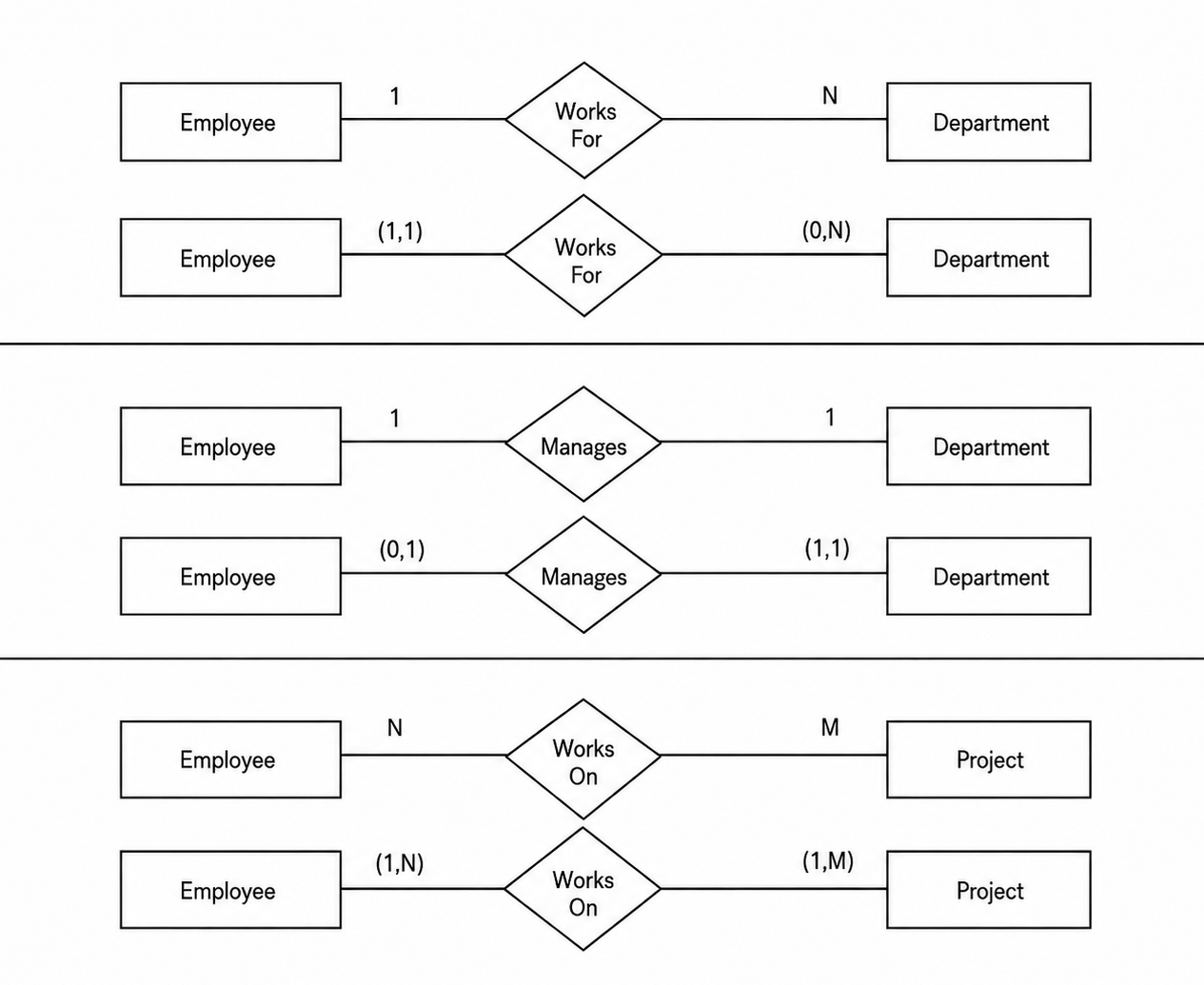
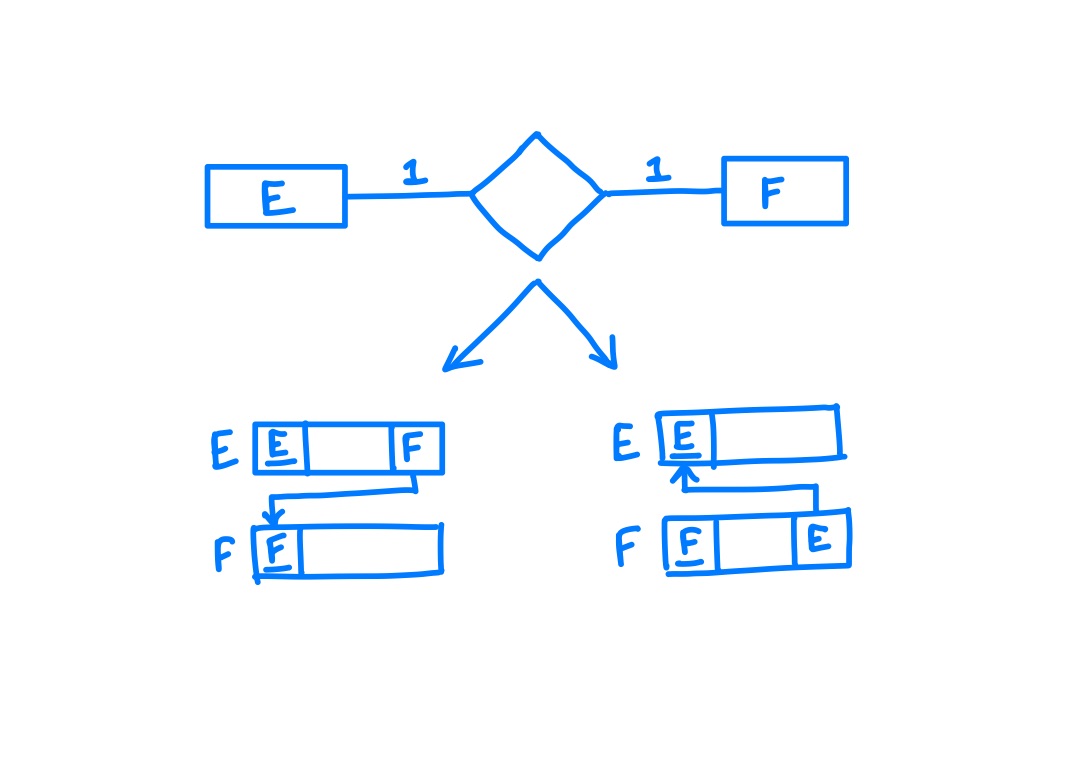
1. One-to-One: Each instance of an entity is associated with at most one instance of another entity, and vice versa.
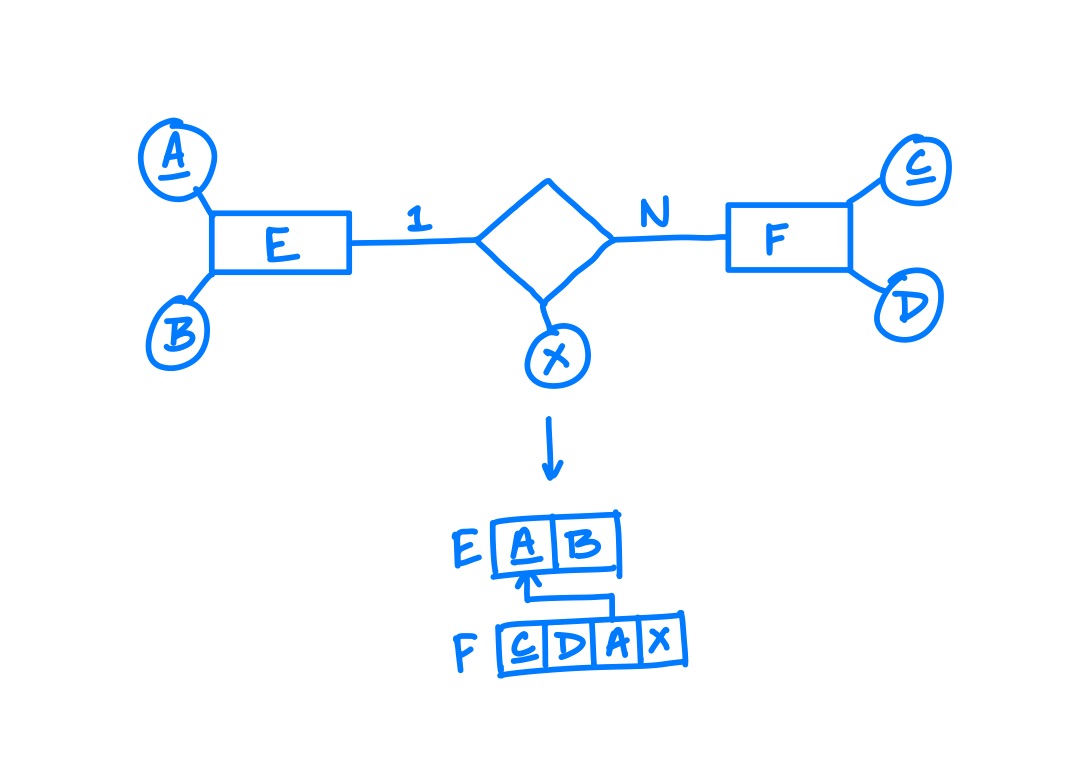
2. One-to-Many: One instance of an entity is associated with multiple instances of another entity, but the reverse is not true.
3. Many-to-One: Similar to a one-to-many relationship but viewed from the opposite perspective.
4. Many-to-Many: Each instance of an entity can relate to multiple instances of another entity and vice versa.

Identifying Relationship
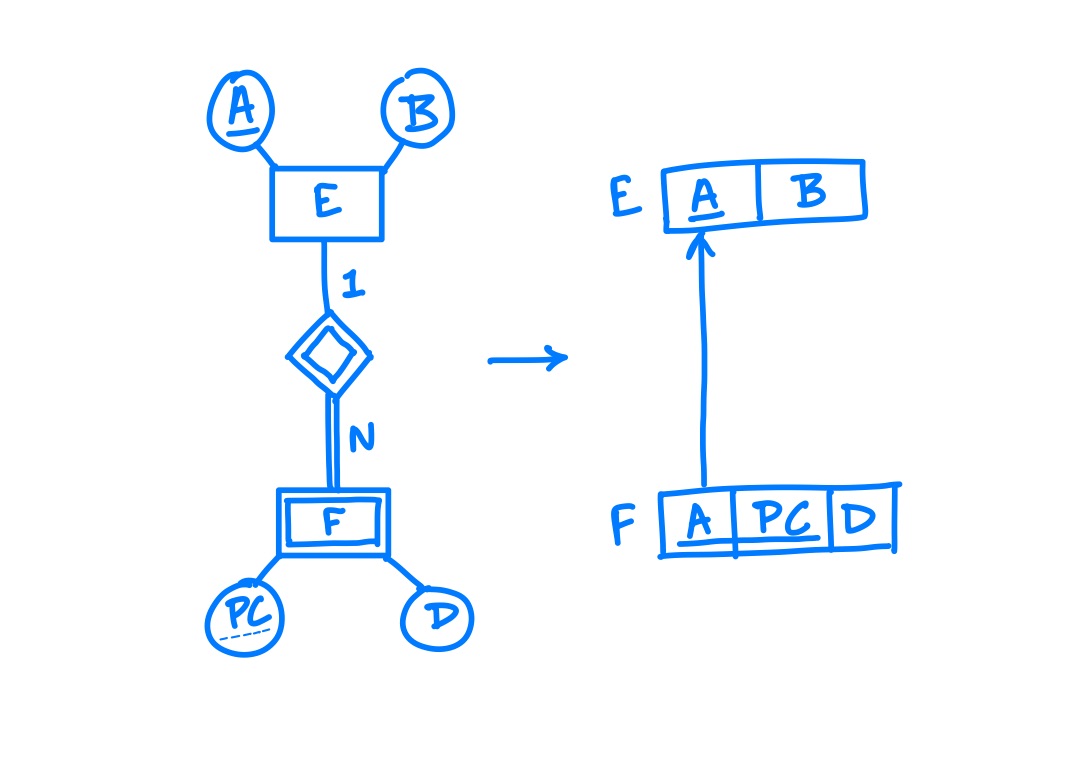
Identifying Relationship: A relationship type in which a weak entity relies on a strong entity for its existence and identity.
- The weak entity cannot be uniquely identified on its own.
- It lacks a primary key.
Participation Constraints
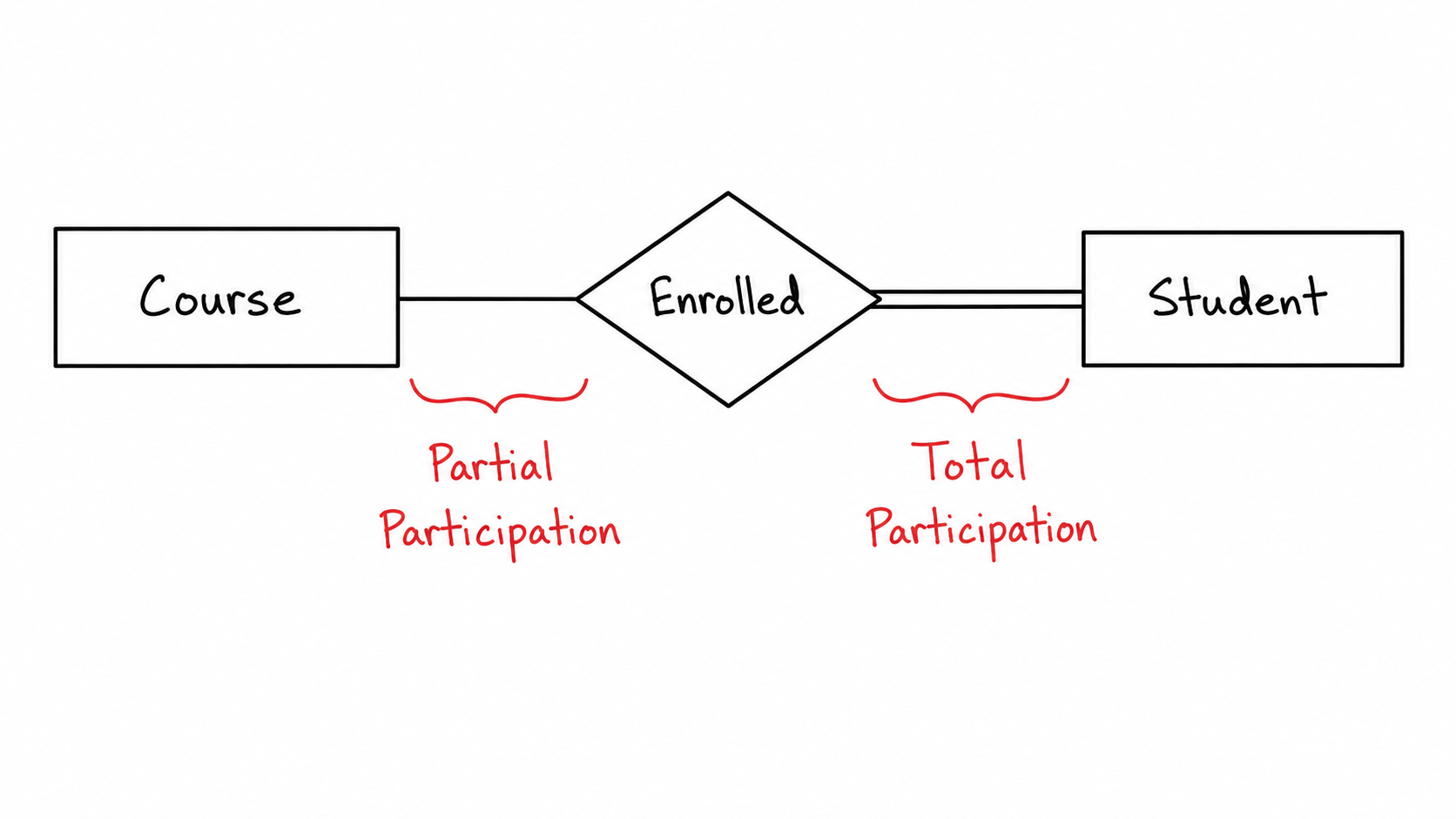
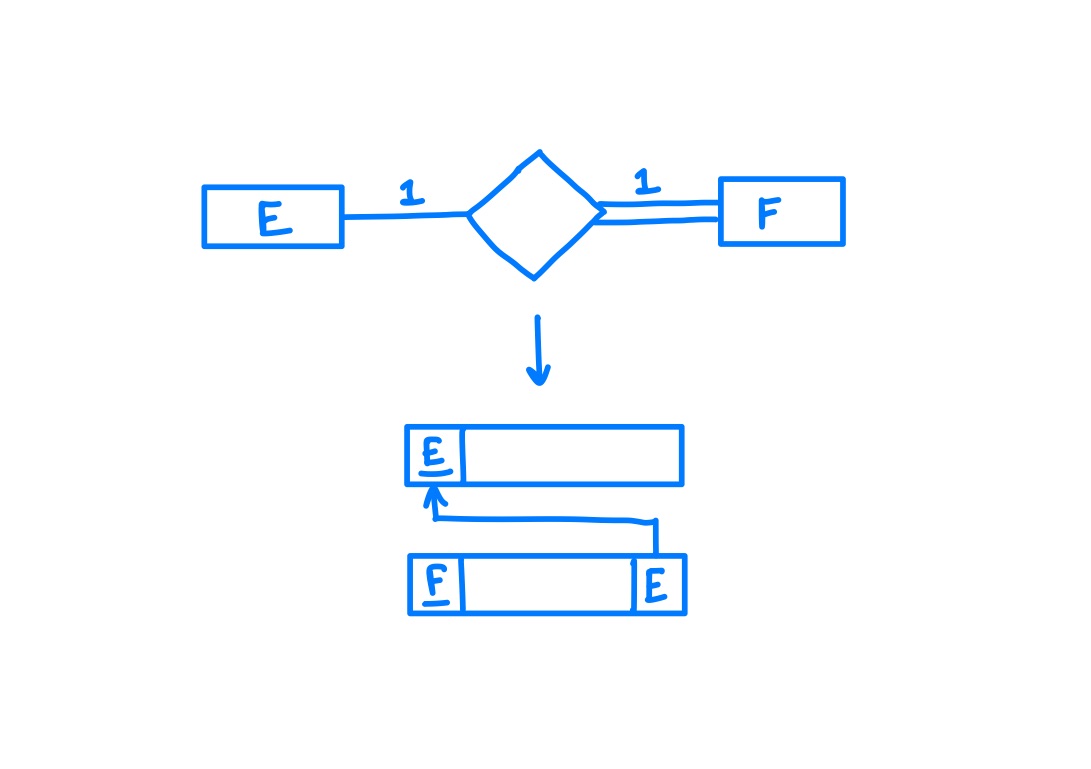
1. Total Participation: Every instance of the entity must participate in the relationship.
2. Partial Participation: Some instances of the entity may or may not participate in the relationship.
Min-Max Representation
The general notation is:
$$ (min,\ max) $$It specifies the minimum and maximum number of relationship instances in which an entity can participate.
Relational Model
Relational Database Model: A method of structuring data using tables or relations consisting of rows and columns.
| Term | Meaning |
|---|---|
| Relation | Table |
| Tuple | Single row in a relation |
| Attribute | Column in a relation |
| Domain | Set of permissible values that an attribute can hold |
| Relation Schema | Structure of a relation including its name, attributes and their respective domains |
| Degree of Relation | Number of attributes in the relation |
| Relation State | Actual set of tuples present in a relation at a particular point in time |
Example of Relation Schema:
Student(
    StudentID : Integer,
    Name      : String,
    Age       : Integer,
    Major     : String
)
$ Degree(Student) = 4 $
Tuple, Tuple Value and NULL
Tuple: A single row or record in a table.
Example:
| StudentID | Name | Age |
|---|---|---|
| 101 | Amit | 20 |
The complete row is one tuple.
Tuple Value: The specific value for each attribute in a tuple corresponding to the data contained in each column of the row.
Example:
Tuple = (101, Amit, 20)
NULL: Represents a missing, unknown or inapplicable value in a relational database.
- It represents the absence of a value for an attribute in a specific tuple.
Relational Constraints
Relational Constraints: Rules that ensure data consistency and integrity.
Every transaction should:
Valid DB State -> Transaction -> Valid DB State
Constraints prevent illegal values from entering the database.
Types of Relational Constraints
1. Domain Constraint: Specifies the permissible values for each attribute in a relation based on its data type and value range.
Example:
Age : Integer
A string value such as "Twenty" would violate the domain if only integers are permitted.
2. Key Constraints: Maintain uniqueness by ensuring that there are no duplicate rows in a table and that each tuple is distinct.
$$ Primary\ Key \neq NULL $$3. Entity Integrity: No attribute in a primary key can have a
NULLvalue because every tuple must have a unique and complete identifier.
4. Referential Integrity: Ensures that a foreign key in one relation matches a primary key in another relation, establishing valid relationships between tables.
Foreign Key -> Primary Key of another table
Key
Key: An attribute that uniquely identifies a row in a relation.
Superkey: Any combination of attributes that can uniquely identify a tuple in a relation.
- Can contain one or more attributes.
- May contain unnecessary additional attributes.
Example:
Suppose:
Student(StudentID, Name, Age)
If StudentID uniquely identifies a student, possible superkeys include:
{StudentID}
{StudentID, Name}
{StudentID, Age}
{StudentID, Name, Age}
Candidate Key: A minimal superkey having the minimum number of attributes necessary to uniquely identify a tuple.
- A relation can have one or more candidate keys.
- No unnecessary attribute is present in a candidate key.
Primary Key: A candidate key chosen by the database designer as the main identifier for tuples in a table.
- Chosen from candidate keys.
- Cannot contain
NULLvalues.
Relationship Between Superkey, Candidate Key and Primary Key
$$ Primary\ Key \subseteq Candidate\ Keys \subseteq Superkeys $$Alternate Keys: Candidate keys that are not chosen as the primary key.
Foreign Key: An attribute or set of attributes in one table that references the primary key of another table.
Example:
Student Details
| ID | Name | Course |
| -- | ---- | ------ |

Student Marks
| ID | Marks |
| -- | ----- |

Here: Student Marks.ID -> Student Details.ID
Composite Key: A key consisting of two or more attributes that together uniquely identify a row.
Summary
| Key | Meaning |
|---|---|
| Superkey | Any set of attributes uniquely identifying a tuple |
| Candidate Key | Minimal superkey |
| Primary Key | Candidate key selected as main identifier |
| Alternate Key | Candidate key not selected as primary key |
| Foreign Key | References primary key of another table |
| Composite Key | Key consisting of two or more attributes |
Actions Upon Constraint Violations
Insertion
If any constraint fails during insertion, reject the insertion completely.
Deletion
Deletion may violate referential integrity.
Approaches:
| Action | Meaning |
|---|---|
| Reject | Refuse the deletion |
| Cascade | Delete all related records referencing the deleted row |
| Set NULL | Set foreign-key columns to NULL to break the relationship |
Update
Combination of Delete and Insert.
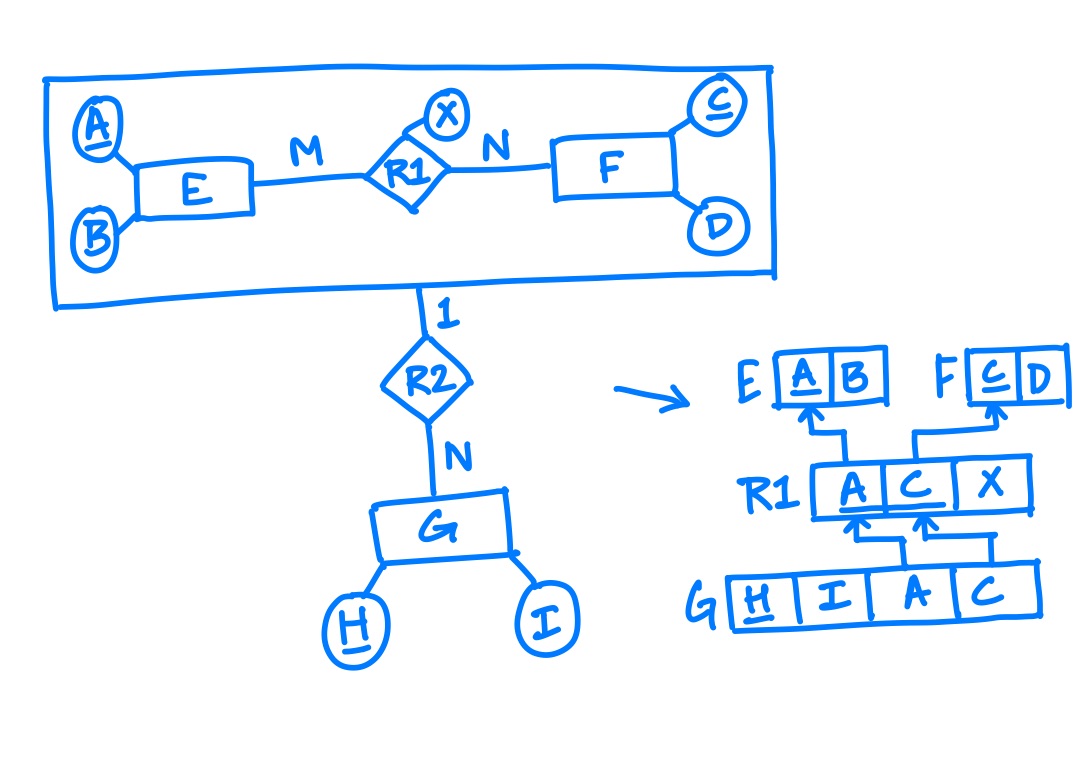
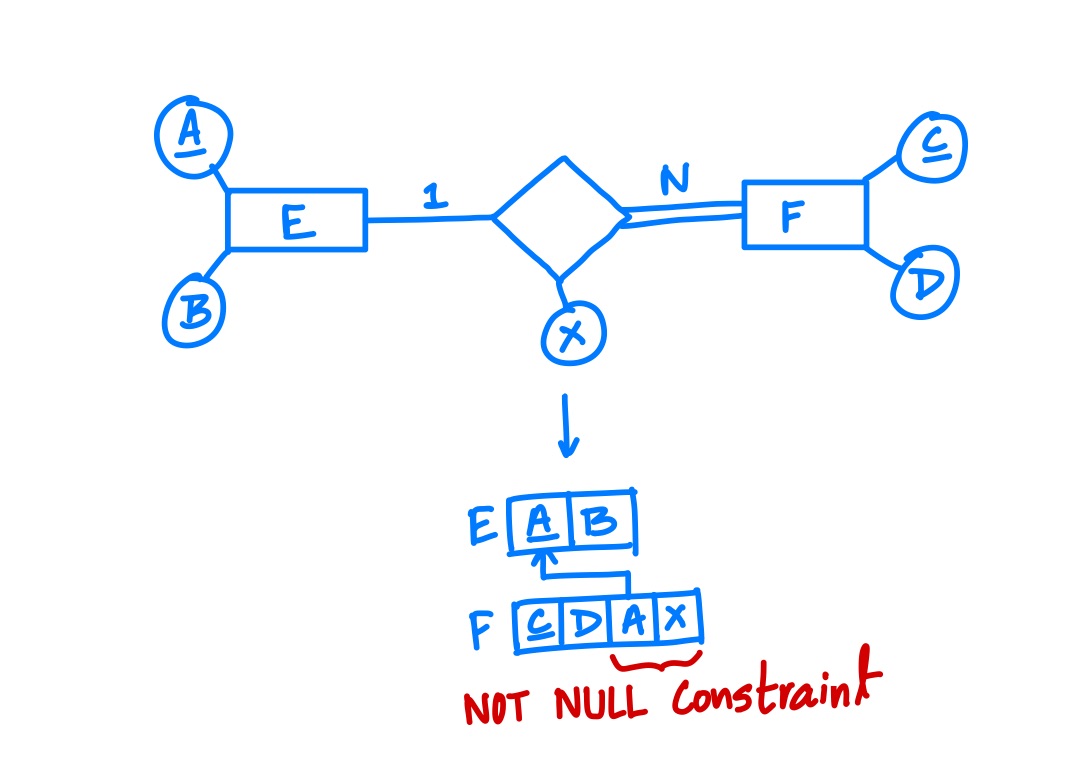
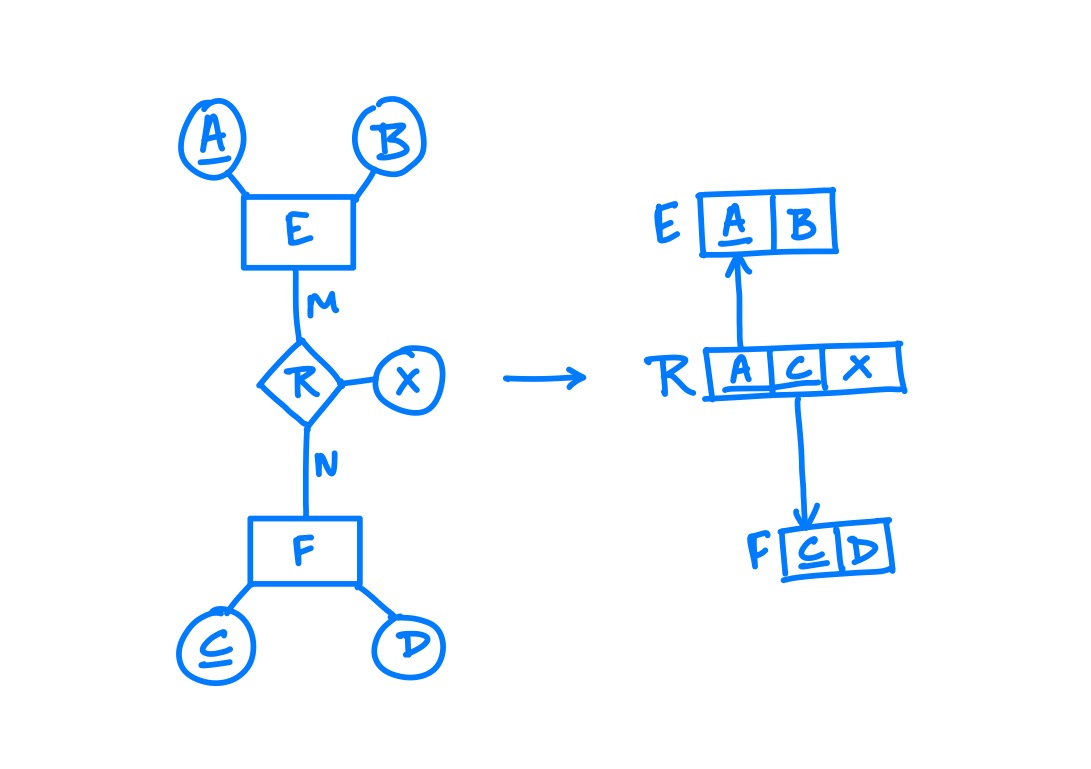
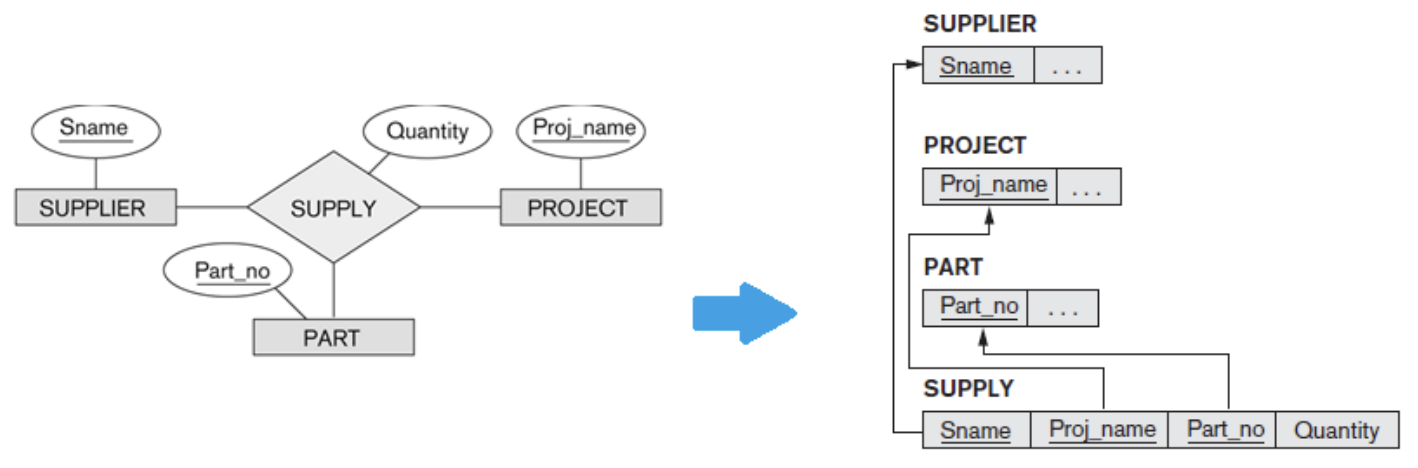
Conversion of ER Model to Relational Model
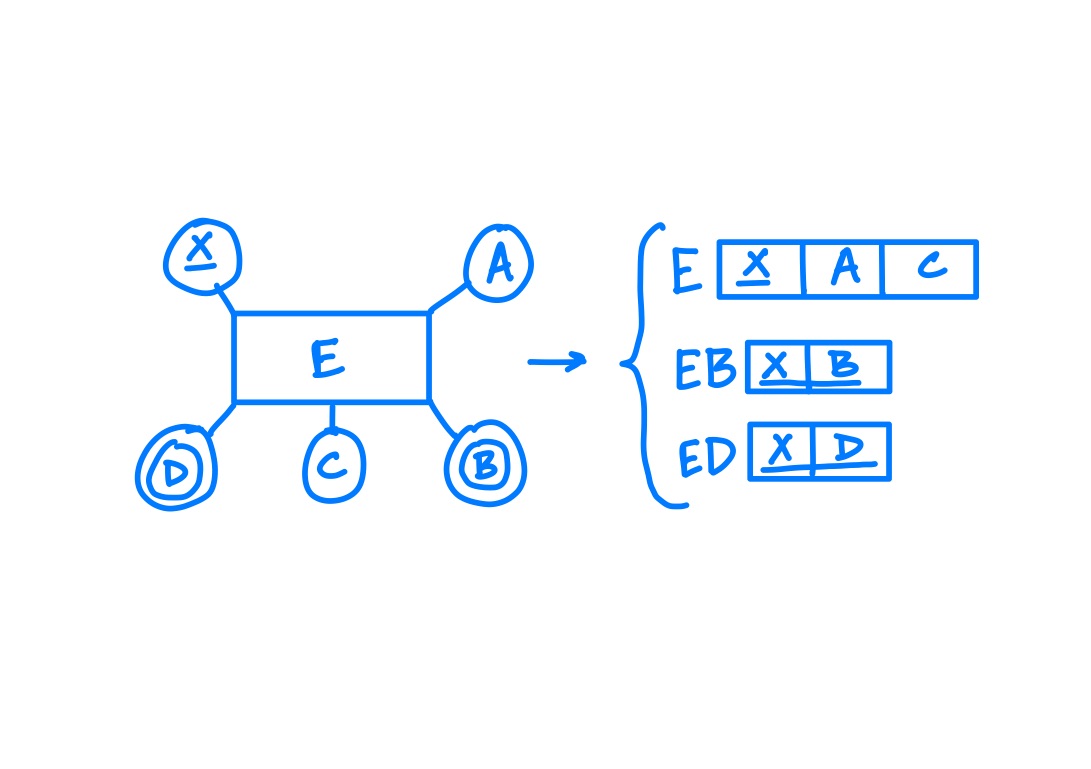
Strong Entity
Relationship
Weak Entity
Ternary Relationship
Example from Elmasri/Navathe:
Aggregation